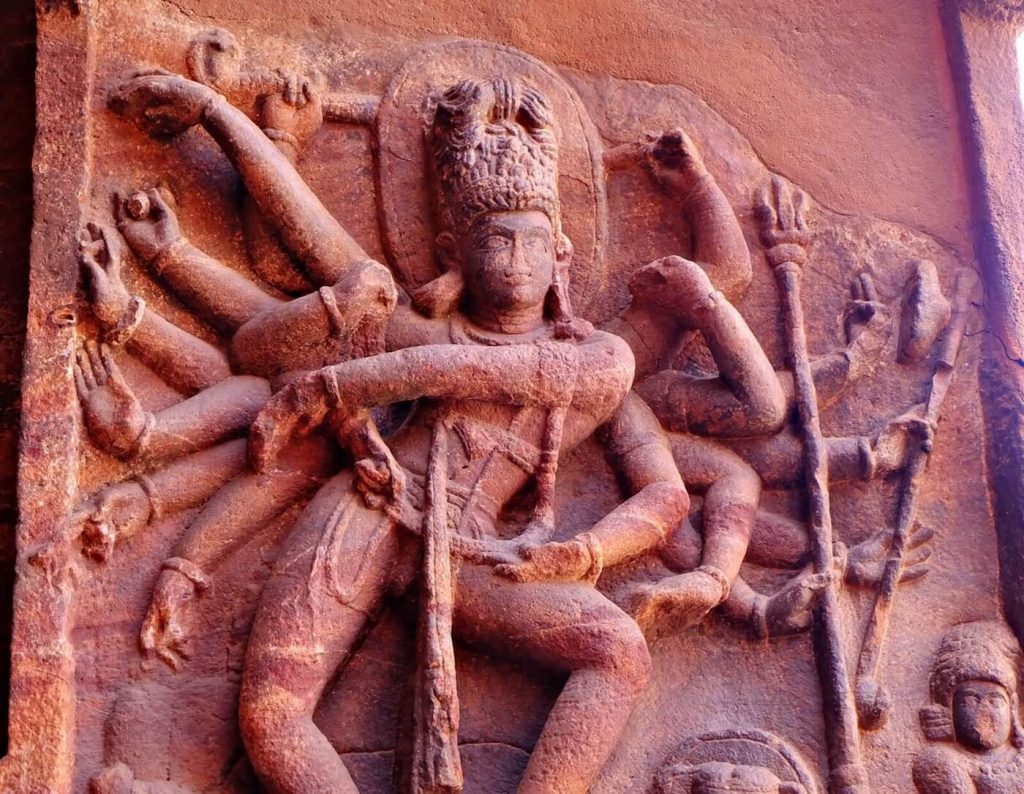
Cave 1 (Shiva Temple)
This is the oldest cave, featuring a prominent relief of Nataraja with 18 arms. The ceiling contains carvings of Nagas and Vidyadharas.
View the Nataraja relief from the left side for better lighting.
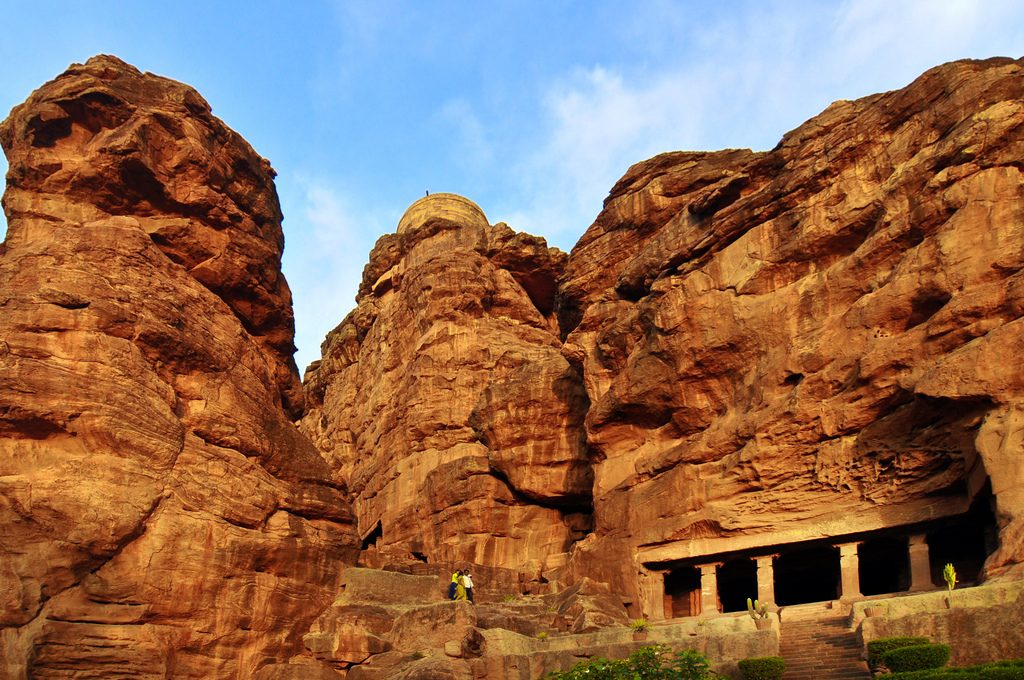
Badami sits in a gorge carved from rust-red sandstone, its cave temples hewn directly into the cliff face between the 6th and 8th centuries. The town spreads along the southern shore of Agastya Lake, with the fort complex rising above the northern bank. Most visitors arrive from Hampi, 140 kilometers west, and spend a half-day climbing the 200 steps that link the four cave shrines.
Quick answer
The hampi badami tourist places include four cave temples carved into the southern cliff (Caves 1–4, dating from 578–642 CE), the Badami Fort on the northern hill, Agastya Lake between them, and the Bhutanatha temples along the eastern shore. The cave temples open daily from 09:00 to 17:30, with a 300 INR conservation fee per person. Plan three to four hours to climb all four caves, walk the fort ramparts, and circle the lake.
Cave 1, dedicated to Shiva, holds an 18-armed Nataraja frozen mid-dance on its ceiling panel — the oldest of the four shrines, completed in 578 CE under Mangalesha. The second cave, 60 meters east, belongs to Vishnu: look for the dwarf Vamana carved across the rear wall, one foot planted on the earth, the other stretching toward the cosmos. Cave 3, the largest and most elaborately columned, carries an inscription dating it to 578 CE and the reign of Mangalesha's brother. Cave 4, a Jain shrine added in the 7th century, marks the end of the Chalukyan excavation. The climb between hampi badami tourist places is steep but short — 200 steps from the ticket gate to Cave 4, with each cave entrance set 10 to 15 meters apart along the escarpment. Sandstone dust coats the treads by midday; the 09:00 to 11:00 arrival window recommended by Karnataka Tourism keeps you ahead of the heat and the tour groups that arrive after lunch. The verandas face west across the lake, so late-afternoon light rakes the carvings at an angle that sharpens every chisel mark. Agastya Lake lies 20 meters below the cave complex, its eastern shore lined with the twin Bhutanatha temples — one early Chalukyan, the other rebuilt in the 11th century. The northern hill, reachable by a separate trail from the lake's northwest corner, carries the remains of Badami Fort: watchtowers, granaries, and a clifftop temple to Malegitti Shivalaya. The fort loop adds 90 minutes and another 150 steps; most visitors skip it in favor of the caves. The town itself holds little beyond guesthouses and a small museum near the bus stand — Badami is not a base but a waypoint, best visited as a day trip from Hampi or as the first stop on a northbound route through Aihole and Pattadakal. The 300 INR entrance fee covers the four cave temples only; the fort and Bhutanatha temples remain free but unstaffed. No food or bottled water is sold on the cliff trail, and the ticket gate closes at 17:30 regardless of whether visitors remain inside. Guides gather near the ticket counter each morning, quoting 500 to 800 INR for a 90-minute tour; their value lies less in historical detail than in knowing which caves to prioritize when time is short.
“The verandas face west across the lake, so late-afternoon light rakes the carvings at an angle that sharpens every chisel mark.”
The best time to visit the Badami cave temples is between October and March when the weather remains moderate. For the most comfortable experience, plan your arrival window for 09:00–11:00 to avoid peak heat and midday crowds.
Pleasant with temperatures 20°C to 30°C. This is the optimal season for exploring the rock-cut shrines.
High heat with temperatures reaching 40°C. Early morning visits are essential to avoid afternoon sun.
Humid with occasional monsoon showers. The landscape turns green, providing cooler conditions for walking.
—
Arriving between 09:00–11:00 ensures you avoid the heavy influx of weekend tourists and the intense midday heat.
Verdict: Plan your trip between October and March, arriving during the 09:00–11:00 window to enjoy the site while avoiding peak temperatures and crowds.
The Badami Cave Temples remain open to visitors throughout the week, maintaining consistent operating hours from Monday to Sunday.
The Badami Cave Temples consist of four distinct rock-cut monuments carved into the red sandstone cliffs. These structures represent the Chalukyan style of architecture, featuring intricate relief sculptures and symbolic iconography.
This is the oldest cave, featuring a prominent relief of Nataraja with 18 arms. The ceiling contains carvings of Nagas and Vidyadharas.
View the Nataraja relief from the left side for better lighting.
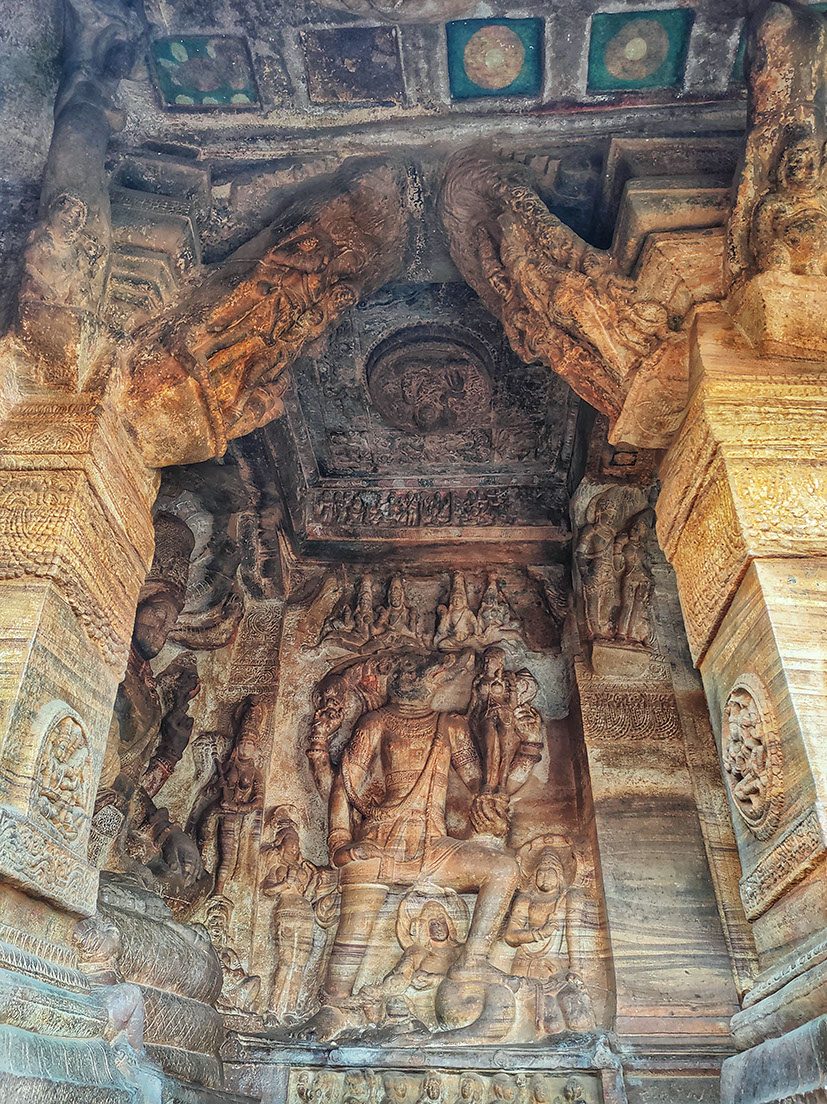
Dedicated to Lord Vishnu, this cave features carvings of Trivikrama and Varaha. The entrance is flanked by guardian figures known as dwarapalas.
Look for the ceiling medallion depicting a swastika surrounded by fish.
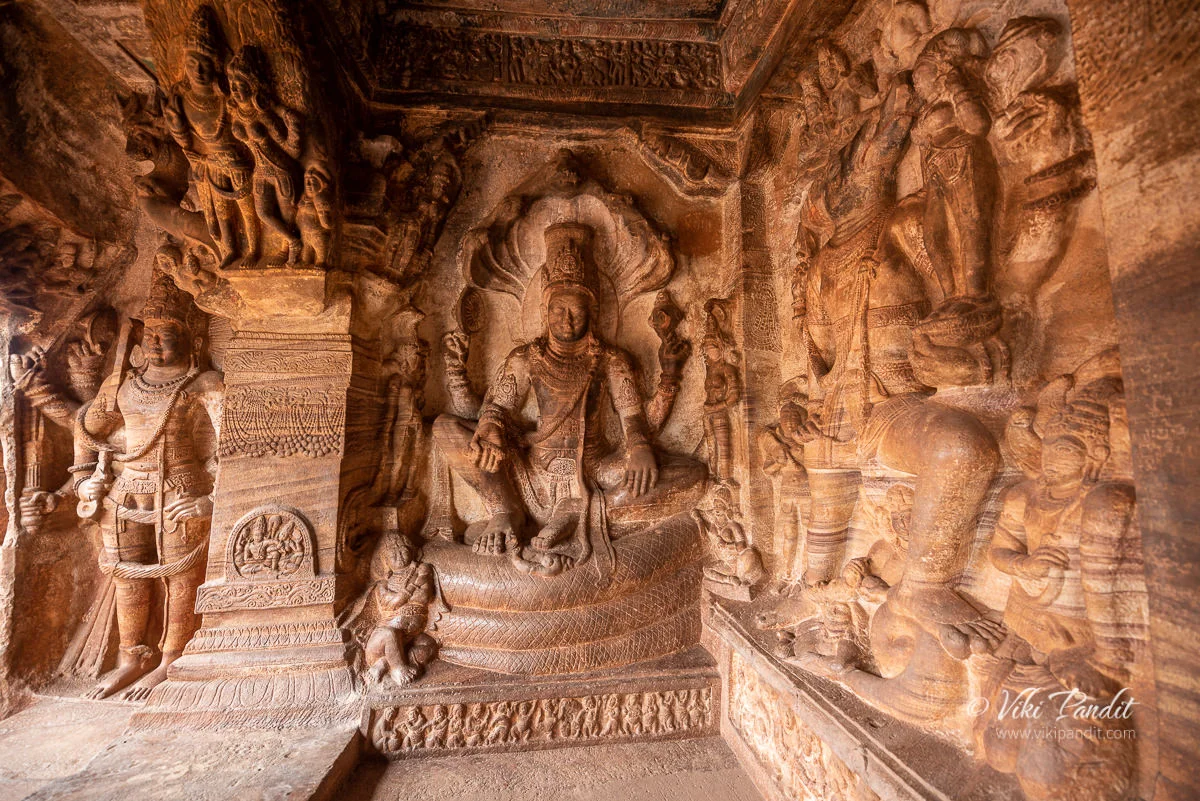
The largest of the group, this cave displays elaborate carvings of Narasimha and Harihara. It dates back to 578 CE and contains preserved mural fragments.
Examine the pillar brackets for detailed mythical animal carvings.
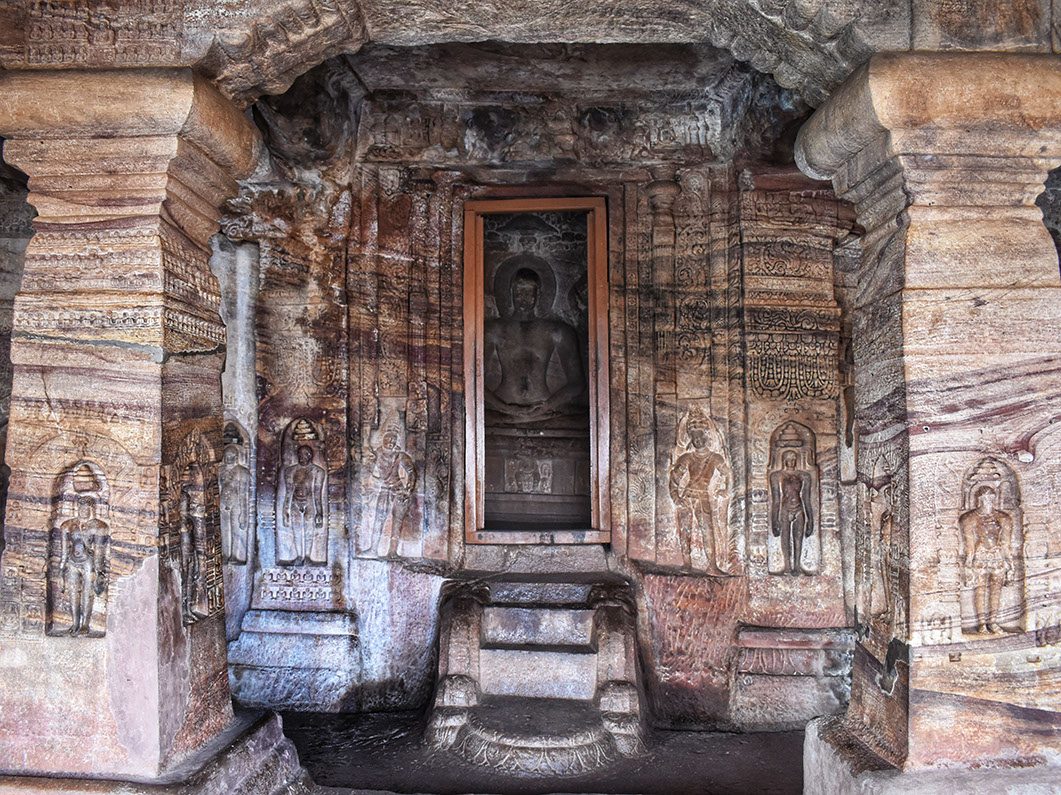
Located at the eastern end, this cave is dedicated to Tirthankaras, including Mahavira and Parshvanatha. It offers a vantage point overlooking the Agastya Tirtha reservoir.
Use the higher elevation to photograph the reservoir and town views.
Badami is located approximately 140 kilometers northwest of Hampi. The most reliable ways to travel between these heritage sites are by private taxi or a combination of rail and road transport.
Hospet Junction to Badami Station via Gadag
Hampi to Badami via Hospet and Bagalkot
Route via NH50 and NH367
If arriving by train, note that Badami Station is located about 5 kilometers from the main cave temple complex, requiring a short local taxi or auto-rickshaw ride to reach the site entrance.
The Badami Cave Temples are located on a rugged hillside and present significant physical challenges. Visitors should be prepared for a climb involving 200 steps to access the primary cave structures.
The site is not equipped for wheelchair navigation due to its uneven terrain and stairs.
Access to the cave temples requires ascending 200 steps.
There are no specialized facilities available at the site.
Visiting during the recommended 09:00–11:00 window helps avoid peak crowds.
Everything you need to know about hampi badami tourist places
When researching hampi badami tourist places, focus on the Chalukyan architecture found in the sandstone caves. Planning your itinerary allows you to balance the ancient monuments of the Vijayanagara empire with the intricate carvings of Badami. Visitors often find that dedicated logistics help streamline the journey between these remote archaeological zones. Accessing these historic sites requires a bit of travel, so early preparation is recommended for a smooth experience.
To avoid peak heat and midday crowds at hampi badami tourist places, plan your arrival between 09:00 and 11:00. This window offers the most comfortable temperature for walking through the cave complexes. Adhering to this timeframe ensures you have sufficient time to explore before the site reaches its busiest period.
The entrance fee for the Badami Cave Temples is 300 INR per person as a conservation fee. This fee is standard for visitors and supports the maintenance of these significant heritage structures. Please be prepared to pay this amount upon arrival at the ticket counter.
The Badami Cave Temples require climbing 200 steps to access the main levels of the site. Visitors should evaluate their physical comfort level with this ascent before planning their visit. If you have mobility concerns, it is wise to pace yourself during the climb to the various caves.
Organizing a visit to include hampi badami tourist places often involves arranging private transport or guided regional tours. Travelers frequently combine these destinations to see the evolution of South Indian temple styles over several centuries. You can review our booking resources to see how to incorporate these sites into your larger regional itinerary.
The most common way to reach the region is by rail or road, with Badami serving as a key destination for heritage enthusiasts. Once you arrive in the town, local taxis or auto-rickshaws provide the best access to the rock-cut shrines. Planning your route in advance helps you navigate the distance between Hampi and these famous sandstone formations efficiently.
Day Trip to Badami from Hampi
Read more GuideHampi Badami Tour Itinerary
Read more Tickets & toursHampi Badami Tours From Mumbai
Read more GuideDistance Between Hampi and Badami
Read more Tickets & toursHampi Badami Tours From Pune
Read more Tickets & toursHampi to Badami Tour Packages
Read more Tickets & toursHampi Badami Tours From Bangalore
Read more